The road from Voi winds upward with the kind of persistence that makes you forget you are still in Kenya. There is no dramatic announcement, no grand gate that declares you have entered something sacred. Instead, the acacia trees grow denser, the air cools almost imperceptibly, and suddenly you realize you are no longer in the flatlands. You are climbing. The Taita Hills rise before you like ancient sentinels, and you understand why the Taita people chose these slopes for their home generations ago.
I arrived on a morning when mist clung to the hills like a secret the land was reluctant to share. My guide, Joseph, smiled at my confusion about the temperature. "People forget Kenya can be cool," he said. "They think of heat and dust and game drives. But here, we remind them that mountains exist too." There was something knowing in his tone, as if he belonged to a very small club of people who truly understood this corner of the country.
The Taita Hills Wildlife Sanctuary is not Maasai Mara. It is not Amboseli with its elephants marching against snow-capped peaks. It sits instead in a kind of beautiful obscurity, known to those who have learned to look beyond the standard safari map. The sanctuary covers around 100,000 acres of forest, grassland, and dense woodland that tumbles across hillsides and sinks into valleys. It is intimate in a way that vast game reserves can never be. You do not feel like you are observing wildlife. You feel like you are visiting them.
Joseph navigated the dusty tracks with the casual competence of someone who has learned the land in seasons and years rather than courses and certifications. He pointed out things I would have missed entirely. A giraffe moving through acacia trees, stepping high and deliberate, its rhythm almost meditative. A troop of vervet monkeys announcing themselves from the canopy with the outrage of creatures who felt they had been overlooked. A Cape buffalo standing absolutely still in a grassland clearing, watching our vehicle with an expression that suggested it was considering whether we were worth the effort of moving. Joseph did not laugh at my tension. He simply said, "They are curious. Not aggressive. Here, things are different."
What makes Taita different is harder to articulate than a list of animals and facts. It is partly geography. The hills create natural barriers and pockets of habitat that feel almost forgotten by the rest of the world. It is partly the forest. Dense, dark, and cool, it wraps around you in a way that open plains never do. It is partly the silence. Not the absence of sound, but the presence of a different kind of sound. Birdcall instead of vehicle engines. Branches rustling in wind instead of tires on gravel. The occasional call of a colobus monkey instead of radio chatter from other safari camps.
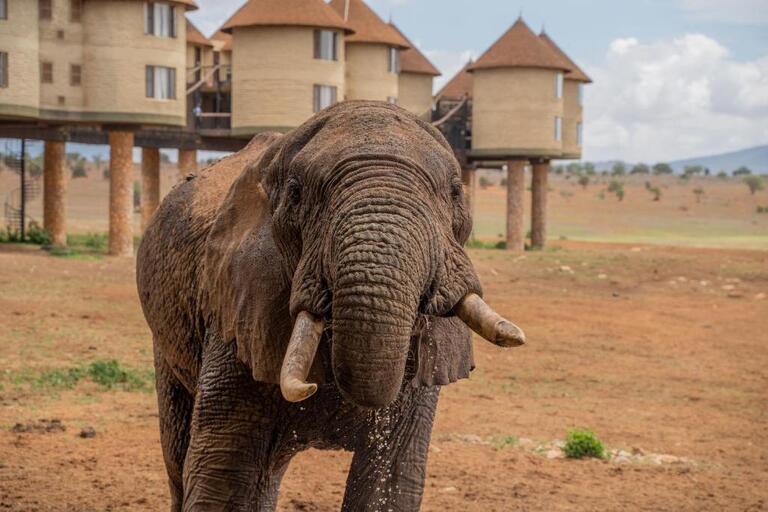
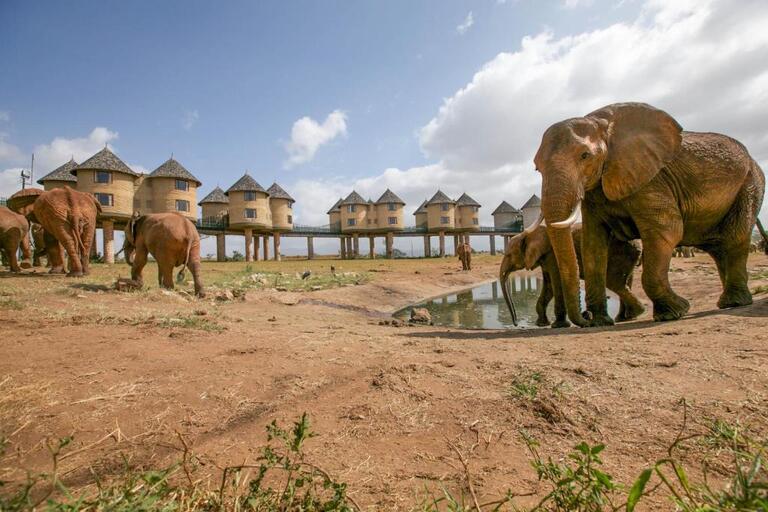
The wildlife here reflects this quieter, more forested existence. The elephants are smaller than their Amboseli cousins, a subspecies adapted to woodland living rather than open plains. There are buffalos and bushbucks, antelopes and warthogs. There are leopards too, though Joseph warned that seeing one is less a matter of luck and more a matter of the leopard deciding whether it wants to be seen. We drove past fresh tracks in the red soil, and I felt the peculiar thrill of knowing something beautiful and dangerous had passed this way, perhaps only minutes before we arrived.
But the animals, while remarkable, are not really the point of Taita. The point is something harder to capture. It is the way the landscape feels layered with history and presence. The Taita people have lived on these hills for centuries, farming the slopes and understanding the forest in a way that colonial maps and safari company brochures can never fully explain. There are caves where they sought shelter. There are ridges where they watched for enemies. There are springs of water that have never run dry, part of the landscape's internal logic that allowed human beings to thrive here long before tourists and vehicles arrived.
On my second evening, I stood at a viewpoint that overlooked the valley. The light was turning gold, the way it does in late afternoon, and the distant Voi River snaked through the landscape like something drawn on the land itself. A group of giraffes moved through the grassland below, and I tried to imagine what it must have looked like when this place was completely wild, before lodges and guides and defined sanctuary boundaries. I imagined Taita hunters moving through these same hills. I imagined the forest sounding the same but feeling entirely different when you lived in it rather than visited it.
Joseph found me there and stood quietly for a moment. "People come to safari for the big moments," he said. "The kill, the predator, the close call. But this place teaches you to see differently. It teaches you that presence is enough. That simply being in a place where wild things live, where the land remembers itself, is enough." He was not being poetic, exactly. He was stating something he had learned through years of guiding people like me through his hills.
The next morning brought rain. Not the dramatic thunderstorms of highland Kenya, but soft, persistent rain that fell on the forest canopy and made everything smell like earth and growing things. Most visitors, Joseph mentioned, wanted to stay in their lodges on days like this. But I wanted to drive, and he obliged, navigating through reduced visibility with the care of someone who did not need to see the road clearly to know where it led. The forest was transformed. Dripping, alive, utterly still in the way that rain makes everything still. We saw a family of baboons huddled on a rocky outcrop, and they watched our vehicle pass with the indifference of creatures who had no need to leave their shelter. A trumpeter hornbill called from somewhere in the canopy, its sound cutting through the rain like a knife.
By afternoon, the rain had stopped and mist rose from the forest in long, slow columns. It was the kind of landscape that makes you understand why people tell stories about wild places. Why they speak of forests as places of mystery and transformation. Why humans have always been both drawn to and frightened of the wild, incomplete places where civilization has not yet finished its work. In Taita, you stand in that liminal space. You are comfortable and fed and safe, but you are also aware, always, that you are a visitor in a place where other logics govern. Where survival means something different. Where time moves by seasons and water availability and the migrations of animals, not by calendars and schedules.
On my last afternoon, Joseph took me to a place he called the Eagle's Nest, a high ridge that offered a view of the entire sanctuary and beyond. The climb was steep enough to remind my legs that hills are not the same as plains, and my lungs that the altitude was making my body work differently than it expected. But at the top, standing in wind that seemed to come from somewhere beyond the geography I could see, I understood something about Taita that no description had quite managed to convey.
This is not a place designed for human comfort or convenience. It is not organized around tour schedules or camera opportunities. It simply exists, having existed for millions of years before human beings arrived and will continue to exist long after we leave. The sanctuary designation, the guides, the lodges, these are recent additions, thin layers of tourism laid over something far more ancient. The real Taita Hills Wildlife Sanctuary is not the managed reserve. It is the actual hills, the actual forest, the actual animals living their actual lives in a place that knows nothing of human intentions or desires.
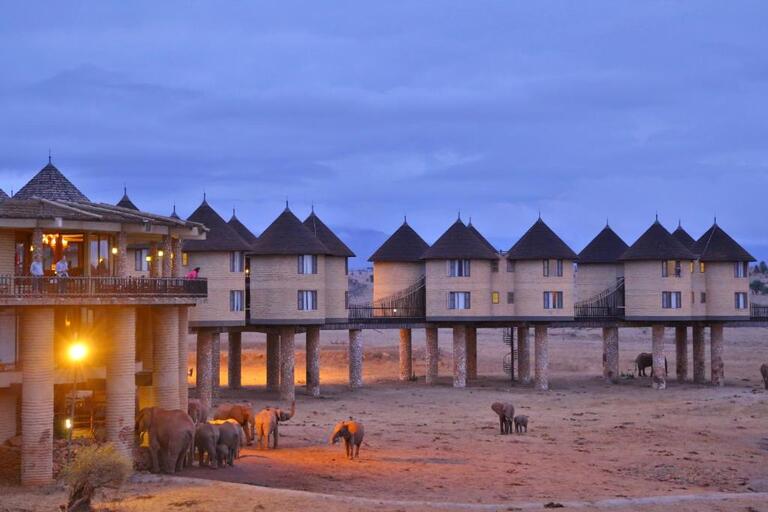
I climbed down as the sun began its descent, and we drove back to the lodge in the soft light of early evening. A kingfisher flashed blue across a stream we crossed. Weaverbirds were constructing their intricate nests in an acacia tree near the track. The landscape was settling into night, preparing itself for the creatures that move under stars. And I realized that the best thing about Taita Hills is that it does not try to be anything other than what it is. It is not a spectacle. It is not arranged for your benefit. It simply continues being itself, beautiful and wild and utterly indifferent to whether anyone is watching.
That, perhaps, is why you should come here. Not for the animals, though they are remarkable. Not for the photos, though the light is often stunning. Come for the reminder that there are still places on Earth where the wild is actually wild, where the human presence is tolerated rather than centered, where you can stand on a hillside and understand that you are a small part of something much older and much larger than yourself. Come to Taita Hills and let the slopes teach you something your everyday life cannot. Let the forest remind you why humans have always been drawn to wild places. Let the silence tell you stories that no guide could ever translate into words.
The hills are waiting. And unlike many places in the world that have been loved to exhaustion, Taita is still content to receive visitors who come not to conquer or exploit, but simply to listen and observe and remember what it means to be human in a world that does not revolve around human needs. That is the real gift of this place. Not the wildlife. Not the views. But the chance to become small again, to understand your right size, to feel what it means to be a guest in a land that belongs entirely to itself.